
2026-10-08 · Jason Miller
Clearing Dust from AC Vents After North Las Vegas Wind Storms
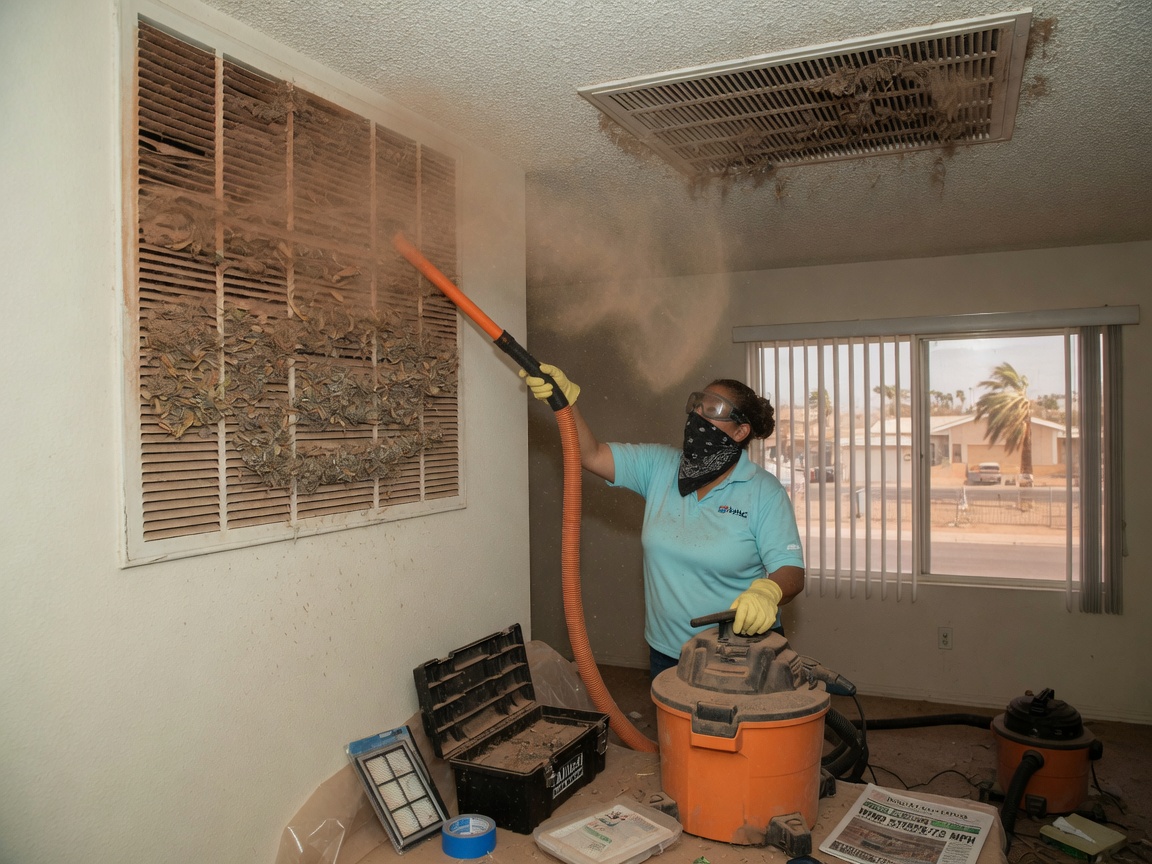
After North Las Vegas wind storms, clearing dust from AC vents starts with turning off the system, removing vent covers, and vacuuming visible debris with a shop vac fitted with a HEPA filter, which handles the bulk of surface dust in 1-2 hours for most single-story homes. Deeper buildup in ducts requires checking the filter first, as Clark County desert winds carry silica particles that settle quickly once the 30-50 mph gusts subside. Homeowners in Aliante near Aliante Nature Discovery Park often see heavier loads because open terrain funnels wind directly into neighborhoods, while Eldorado and North Ranch properties with older ranch-style builds face the same issue from unsealed returns. Skip compressed air or water sprays that push dust farther into the system or create mold risks during mild winters.
Understanding Desert Wind Patterns in North Las Vegas
Clark County experiences frequent spring and fall wind events that pick up loose soil from surrounding desert flats and deposit it into HVAC intakes. These storms differ from summer monsoons because they carry dry, abrasive particles rather than moisture, which means dust travels deeper into return ducts before settling on coils and registers. Homes built in the 1980s and 1990s in North Ranch commonly have flex duct runs that trap more material than rigid metal, especially when filters are changed less often during shoulder seasons. Proximity to Craig Ranch Regional Park increases exposure because the open space lets winds accelerate without tree barriers. The result is reduced airflow that forces the AC to run longer once extreme summer heat returns, raising energy use in Las Vegas and Henderson-adjacent areas.
Inspecting Vents and Returns After a Storm
Begin inspection by checking every supply and return vent for gray-brown dust layers thicker than 1/8 inch, which signals storm-related intrusion rather than normal household dust. Use a flashlight to look inside the first 2-3 feet of duct visible from the vent opening; if the interior shows caked material or the filter is coated within days of replacement, the storm has affected the full run. In Eldorado homes with slab foundations, low returns near the floor collect the heaviest loads because wind-driven dust hugs the ground before entering. Test airflow by holding a tissue to each vent with the fan on low; weak pull or push indicates blockage downstream. Document any musty odors that appear after the storm, as trapped dust can hold allergens that circulate once cooling resumes.
Practical Cleaning Steps for Homeowners
Remove and wash vent covers with mild soap and water, then let them dry completely before reinstalling to avoid warping. Vacuum accessible duct openings using a crevice tool and brush attachment, working from the farthest vents toward the main return to pull debris outward. Replace the existing filter with a MERV 8 or higher rated one rated for 90 days of desert conditions, noting that storm dust shortens filter life to 30-45 days. Wipe register blades and the area around the air handler if accessible from the attic or closet. Avoid disassembling duct sections yourself, since disturbing sealed joints in North Las Vegas tract homes often creates new leak points that pull in more dust during the next wind event.
When Professional Duct Cleaning Becomes Necessary
Call for HVAC duct cleaning when vacuuming alone fails to restore airflow or when dust reappears on vents within a week of cleaning. Technicians use negative-air machines and rotary brushes sized for 6-8 inch residential ducts common in Aliante builds, removing the fine silica that household tools miss. Pair this with AC maintenance to check coil cleanliness, since storm dust that bypasses the filter lands on the evaporator and reduces efficiency during peak summer loads. Homes near Las Vegas with pets or smokers see faster re-soiling and benefit from adding indoor air quality testing after major wind events.
Preventing Repeat Buildup in Local Homes
Upgrade to pleated filters changed every 30 days during windy months and seal return gaps with mastic rather than tape, which fails in temperature swings between mild winters and 110-degree summers. Keep landscaping trimmed around intakes at properties bordering Craig Ranch Regional Park to reduce the path for blowing soil. Review the article AC Not Cooling in North Las Vegas Summer Heat for related airflow troubleshooting once vents are clear. Consistent attention to these details keeps systems running reliably across North Ranch and Eldorado without repeated post-storm interventions.